Blog Archives

The Greatest Challenges Revealed, and Crushed: The Nature of the Lord’s Supper.
 Thoughts which carry this broken pastor to Jesus, and to His cross.
“Now in giving the following instruction I do not praise you, because you come together not for the better but for the worse. For in the first place, when you come together as a church I hear there are divisions among you, and in part I believe it. For there must in fact be divisions among you, so that those of you who are approved may be evident.Now when you come together at the same place, you are not really eating the Lord’s Supper.” (1 Corinthians 11:17–20, NET)
If the Sacrament of the Altar occupies such a central position in the Church, it is easily understood why it has become time and again the object of dissension and controversy. Every disease of the Church becomes manifest at the Lord’s Table….
Just as the Church of Christ becomes conscious of its own nature as it gathers around the Lord’s Table, so its weaknesses, errors, and sins also become manifest on that occasion.
It has been said by scientists that for every action, there is an equal and opposite reaction. As a theologian, I know this not to be true. There are cases where the reaction is significantly over the top of the original action.
If it wasn’t this way, being a pastor would be worthless, and ministry would be impossible.
I believe Sasse was right – that at the Lord’s Supper dissension and division become manifest most clearly. It is there that diseased and divided churches find no where to hide their brokenness.
I am not just talking about theological disagreements about the Lord’s Supper, fro even in those churches who do not recognize the miracle and mystery, divisions become so much clearer at the Altar. For the hope of healing isn’t seen, there is just contention, and avoidance. (this is why sharing/passing the peace once came after the words of institution and still does). And the lack of intimacy within the family of God leads to distancing ourselves from God.
Anecdotal stories abound about this – from the situation in Corinth to those who time their approach to the altar so as not to be close to those they are divided from–something that may be evident to others in the church.
If there is room for division- if that is the observed action at the Lord’s Supper, how much greater is the reaction – the invasion of the Lord and His mercy? To look upon and receive the Body sacrificed for us, and the Blood shed for the forgiveness of all our sin. To think and dwell on this mystery brings healing of damaged emotions and damaged relationships – this too is the work of the Holy Spirit–the comforter. It is the power of the gospel which saves and joins us all together, and breaks down the differences.
This isn’t magic, or some medicinal nature. It is because of the promise–the forgiveness of sins, both of me and my adversary. FOr if God is communing with one, He is communing with the other. And what was once coming together for worse (judgment in fact) is now coming together unified in Christ.
For what division, what way of arguing is worth the companionship and communion of God?
These divisions, the broken relationships, even when based on errors need God’s intervention, His love and mercy to flood our hearts (ours – as in everyone together). It is then, based on His word, that we will find things healing, being reconciled and redeemed to Him.
This is our God. Amen
Sasse, H. (2001). This Is My Body: Luther’s Contention for the Real Presence in the Sacrament of the Altar (p. 3). Wipf and Stock Publishers.

Forgiveness is Not A Learned Action or Skill
Devotional Thought of the Day: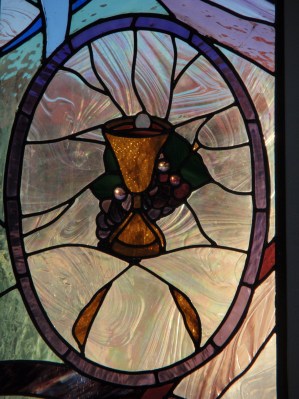
6 For when we were still helpless, Christ died for the wicked at the time that God chose. 7 It is a difficult thing for someone to die for a righteous person. It may even be that someone might dare to die for a good person. 8 But God has shown us how much he loves us—it was while we were still sinners that Christ died for us! 9 By his blood we are now put right with God; how much more, then, will we be saved by him from God’s anger! 10 We were God’s enemies, but he made us his friends through the death of his Son. Now that we are God’s friends, how much more will we be saved by Christ’s life! Romans 5:6-10 (TEV)
804 That friend of ours with no false humility used to say: “I haven’t needed to learn how to forgive, because the Lord has taught me how to love.” (1)
There are times where I am amazed by the simplicity and truth in St. Josemaria’s writings.
A lot of ministry deals with reconciliation, bringing back together, and balancing out that which is broken. It might be reconciling the relationship of a married couple who have “fallen out of love”. Or reconciling a church that has too long buried conflict, thinking that if they ignored it, they could all get along. OR reconciling someone who is so burdened and oppressed by sin, that they cannot even imagine that they could be forgiven.
Reconciliation begins with forgiveness, which is where the healing starts.
But forgiveness, true forgiveness, where we ask that God doesn’t count their sin against them, (and therefore neither do we) is difficult or hard, or at least it seems to be. It seems to be unnatural, something we have to be forced to do. Our hearts cry against it, saying things like, I will forgive, but I won’t forget. It requires we give up our right for revenge, we lower our defenses, we acknowledge that this could happen 7 times 70 minus one more time.
Forgiveness leaves us weak and defenseless, or so we fear. It leaves us anxiety ridden, as we await the next blow. If it is not real, but if forgiveness is simply an act, it leaves us grumbling and ready to complain to whomever will listen, and assist us in self-justification. We can even justify ourselves by pointing out that while we’ve forgiven them, they haven’t done anything to reconcile the situation.
Forgiveness can’t be done simply because it is commanded. It is not a matter of obedience and discipline in its own right. There has to be something in us, that causes us to desire forgiveness, to desire to find that reconciliation, to give up all of our rights, in order to do what is best for the other person.
Forgiveness is impossible, without love.
Deep, abiding love.
The kind that acts like superglue in our relationships.
If we love them, we will seek what is best for them, which includes the forgiveness of every sin.
St. Josemaria has it right, if we love them, as Christ loves us, it is not a matter of needing instruction, or even being commanded to forgive, to reconcile with them. We become like Paul, willing to sacrifice anything, in order that they would be reconciled to God, for that is what forgiveness is about as well. Asking that the Father not hold them accountable, asking that God forgives them. Forgiveness and reconciliation become what we are naturally compelled to do, as we love them.
Which means we have to know Christ’s love first. We have to see this in action, and more importantly know that we’ve been forgiven this way. Romans 5 above has to become so integral to us, we have to realize what it means that God loved us, and therefore forgave us, and made His home among us who sinned against Him.
It is that love of His, which we are embraced in, that leads us to know the joy of having sin removed, of having guilt and shame done away with, that brings us to the joy He sought for us, the joy that He shares in, as reconciliation is not just a word, but a reality. We are loved, we are free to love in return, all else is shed.
In that moment, loved by God, we find that forgiveness doesn’t take strength of character, it simply is the natural action of one who loves, as they are loved.
